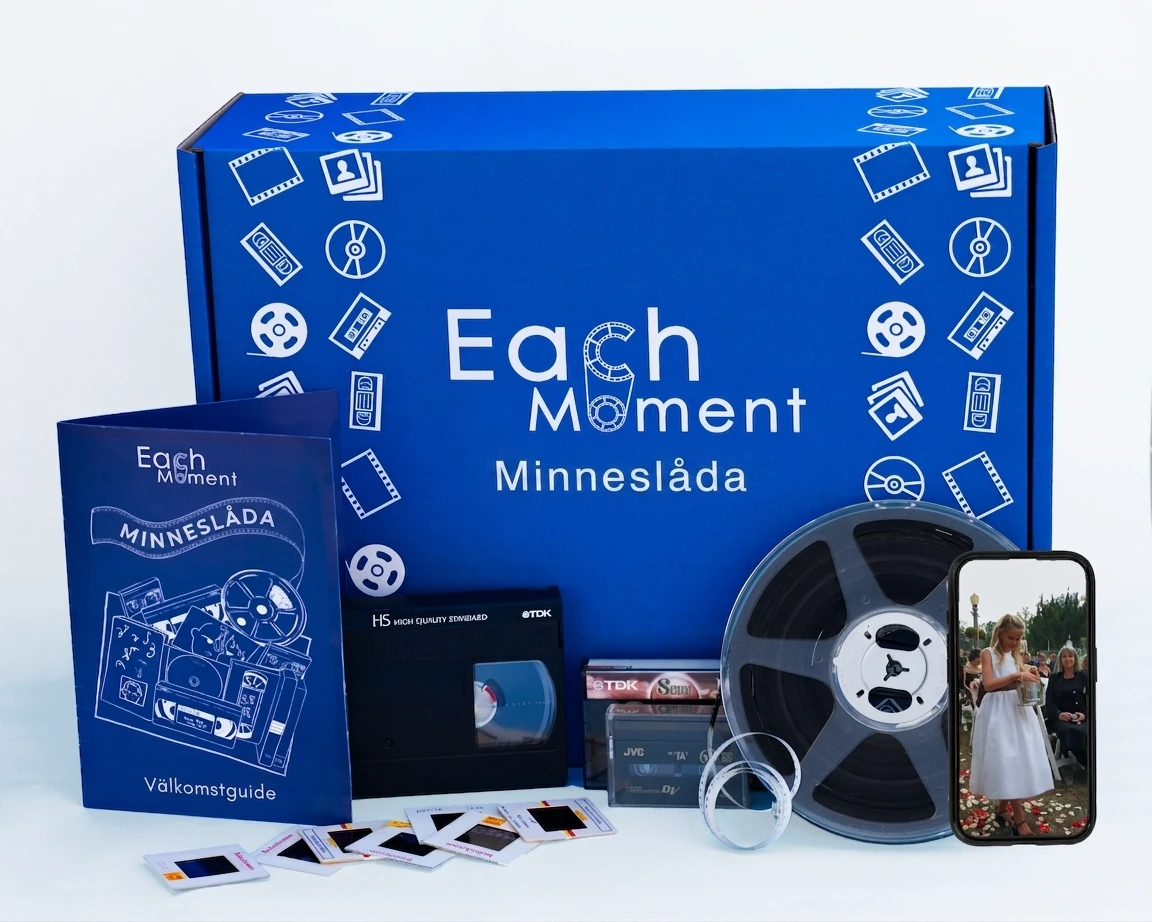
Att digitalisera dina diabilder med EachMoment är enkelt, tryggt och smidigt:
1. Beställ och ta emot din Minneslåda: Använd vårt offertverktyg online, välj "Diabilder" och betala bara 100 kr i deposition. Din kostnadsfria Minneslåda skickas med snabb leverans.
2. Packa dina diabilder: Lägg dina diabilder i Minneslådan med det medföljande skyddsmaterialet. Ingen förbehandling behövs — vi tar hand om allt!
3. Boka fri budupphämtning: Boka en gratis budupphämtning via vår onlineportal. Din Minneslåda transporteras tryggt till vårt labb.
4. Bedömning och faktura (eller återbetalning): Våra tekniker bedömer dina diabilder och skickar en tydlig onlinefaktura, eller en återbetalning om det behövs.
5. Professionell rengöring och högupplöst skanning: Dina diabilder genomgår professionell rengöring och skannas med hög upplösning.
6. Kvalitetskontroll och digital förberedelse: Alla skannade bilder genomgår rigorös kvalitetskontroll och förbereds i ditt valda format.
7. Trygg retur: Dina originaldiabilder och digitala kopior skickas tillbaka via spårbar budtjänst.
8. Njut av dina minnen: Dela och njut av dina restaurerade bilder på valfri enhet!